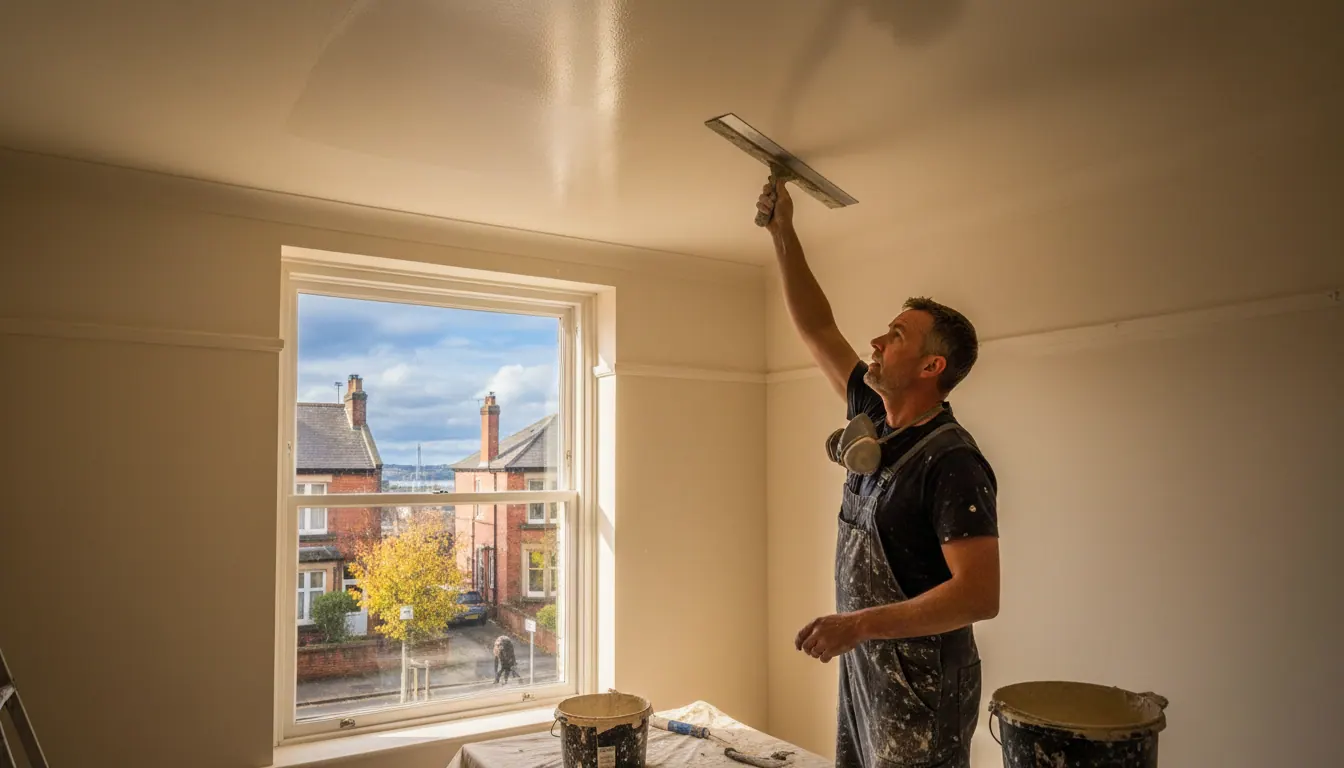
Plastering After a Rewire: What to Expect in Newcastle Homes
Had a rewire in your Newcastle home? Here's exactly what to expect from plastering after a rewire, step by step, from chases to finished walls.

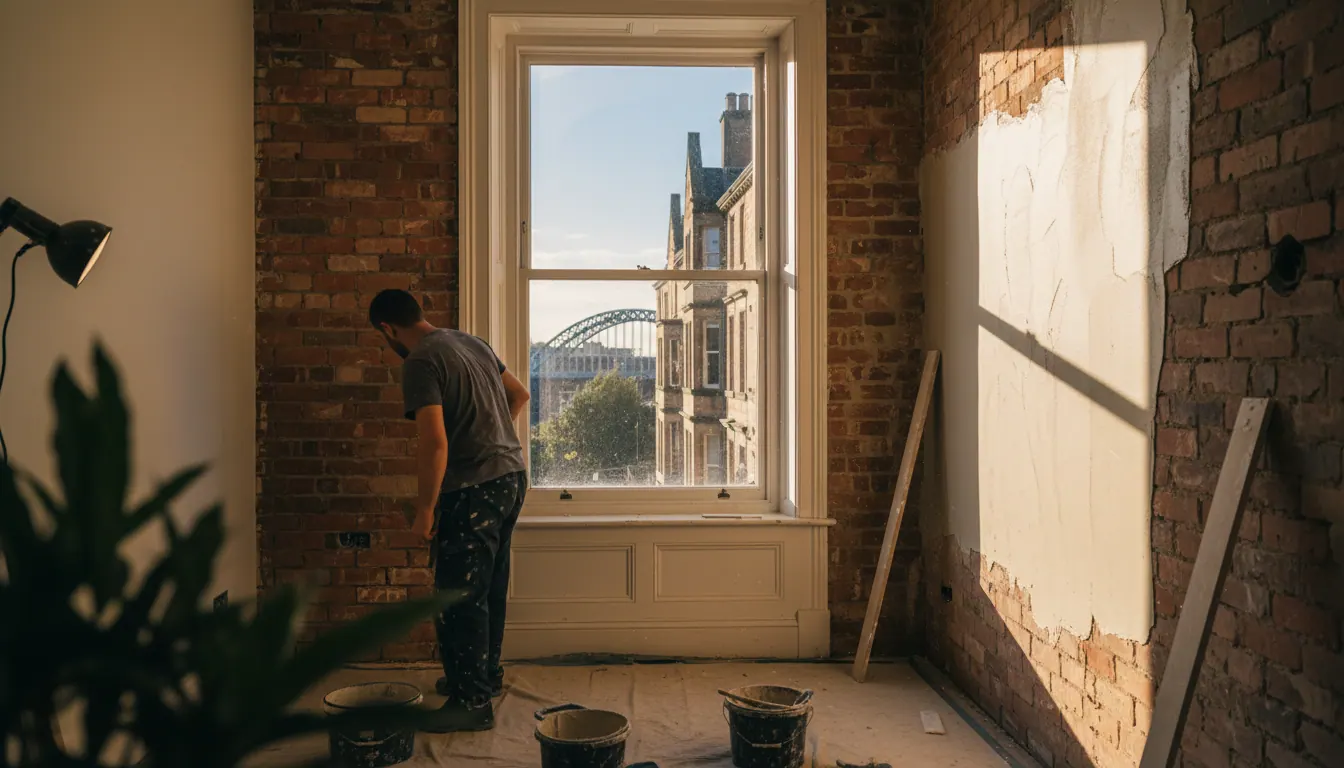
Why Plastering After a Rewire Is Almost Always Bigger Than You Expect
A rewire is one of those jobs that looks tidy on paper and then opens up into something quite different once the electricians get going. Cables need to run somewhere, and in most homes across Newcastle upon Tyne that means cutting chases into walls and ceilings, lifting floorboards, and sometimes cutting out whole sections of plaster to get around corners or into awkward spots.
By the time the electricians are done and the second fix is complete (sockets, switches, light fittings all in), you are left with a network of filled chases, patched holes and disturbed surfaces that rarely blend back in on their own. In older properties, which make up a large proportion of the housing stock across Newcastle, the damage tends to be more extensive still. Victorian and Edwardian terraces, Tyneside flats and 1930s semis often have thick solid walls and, in many cases, lath and plaster ceilings. Chasing into those materials is messier and more disruptive than working in a modern plasterboard house.
So what actually needs to happen before you can paint and move on with your life? That is what this guide is for.
First Fix, Second Fix: When Does the Plasterer Come In?
Getting the sequence right matters. Plastering after a rewire should only happen after second fix electrics are complete. That means all the cables are in, the back boxes for sockets and switches are set, and the electrician has finished and signed off the installation. If you bring a plasterer in too early, there is a real risk of cables being disturbed or back boxes getting buried.
Once second fix is done, your plasterer can assess the full picture. On a typical Newcastle terrace rewire, that assessment usually covers:
- Chases in walls where cables have been run and filled (often roughly)
- Larger cut-outs around consumer units, back boxes or junction points
- Ceiling damage from cables run above plasterboard or through lath and plaster
- Any areas where the original plaster has cracked, lifted or blown as a result of the work nearby
A good plasterer will not just fill the chases and leave. They will check whether the surrounding plaster is still sound. Vibration and dust from chasing tools can loosen plaster that was already borderline, especially in older properties with original lath and plaster. Tapping the wall with your knuckles is the simplest test: a hollow sound means the plaster has separated from the surface behind it and will need to come off.
Patching vs Full Reskim: Which Do You Actually Need?
This is the question most Newcastle homeowners wrestle with, and the honest answer is: it depends on the condition of your walls before the rewire started.
Patching makes sense when the existing plaster is in good condition, the chases are relatively narrow and the electricians have been careful. A skilled plasterer can fill, feather and skim over the affected areas so they blend in well. It is quicker and less disruptive. Our plaster repairs service covers exactly this kind of work.
A full reskim makes more sense when:
- The existing plaster is old, uneven or already showing cracks
- There are large areas of blown or hollow plaster that need to come off
- The rewire was extensive and the wall surfaces are heavily disturbed
- You are planning to redecorate the whole room anyway
In many older Newcastle terraces, a rewire is a good trigger to finally get the walls and ceilings properly sorted. The room is already disrupted, furniture is moved out, and the walls are bare. It often makes practical sense to have a full skim coat applied while you are at it, rather than patch and redecorate only to face the same job again in a few years.
For a broader look at what plastering involves and which approach suits different situations, our guide What Do Plasterers Actually Do? A Newcastle Homeowner's Guide covers the options clearly.
Lath and Plaster: The Complication in Older Newcastle Homes
If your home was built before roughly 1950, there is a reasonable chance your walls and ceilings still have the original lath and plaster construction. Thin strips of timber (the laths) are fixed to the wall or ceiling joists, and several coats of plaster are built up over them.
Lath and plaster is durable when it is undisturbed, but chasing through it or working near it during a rewire can cause sections to crack and drop. Once the plaster has separated from the laths, patching alone rarely gives a satisfactory result. The options are usually to cut out the damaged section and re-plaster it properly, or to over-board with plasterboard and skim the whole surface.
Older Newcastle properties often show this problem. A rewire in a Tyneside flat, for example, can reveal ceilings that have been holding on by a thread, and the vibration from chasing tools can be the thing that finally brings a large section down. It is better to know that before you start decorating.
What to Expect From the Plastering Process Itself
Once the scope is agreed, here is roughly how the work goes:
- Preparation. We cover floors and furniture with dust sheets. Plastering is a messy trade and we take the protection of your home seriously.
- Hacking off. Any blown or unsound plaster comes off back to a solid surface. This creates dust and debris, so good sheeting matters.
- Bonding or PVA priming. Bare masonry or plasterboard may need to be treated before the plaster goes on, to control suction and help adhesion.
- Applying the plaster. Whether it is a patch, a full skim or a new coat on dry-lined walls, the plaster goes on in one or two coats depending on the depth needed.
- Finishing. The final pass is floated and polished to a smooth, flat surface ready for decoration.
- Drying. This is where patience comes in. New plaster needs to dry fully before you paint it. How long that takes varies depending on the thickness of the plaster, the temperature and the ventilation in the room. Always follow the plaster manufacturer's guidance and use your own judgement about whether the surface genuinely looks and feels dry.
One of our customers, Suzy, described exactly this kind of job in her Google review:
"First class plastering from Vasil and team, and an excellent decorating job from Thomas. Everyone was very quick and efficient and we are blown away with how good our bedroom looks. Having had a rewire, we have lots more plastering and painting to do. We would not hesitate to recommend this company, or use them again in future. Thank you all so much!"
Suzy's experience reflects something that is common after a rewire: it is just the start. Once one room is done properly, it is hard not to want the rest of the house to match.
Painting After Plastering: Getting the Sequence Right
Once the plaster is dry, it still needs to be prepared before your topcoats go on. Fresh plaster is highly porous and will soak up ordinary emulsion unevenly, leaving a patchy finish. The usual approach is a mist coat first: a diluted emulsion that soaks in, seals the surface and gives subsequent coats something to grip. Follow your paint manufacturer's guidance on the dilution.
Because we offer both plastering and interior painting and decorating as part of the same team, we can take a job from bare walls right through to finished decoration without you having to coordinate two separate contractors. That matters when you are already managing the aftermath of a rewire.
If you want more detail on timings and drying, How Long Does It Take a Plasterer to Skim a Ceiling? goes through the stages in more detail.
Frequently Asked Questions
Do I need a full reskim after a rewire, or can the chases just be filled? It depends on the condition of your existing plaster. If the walls were sound and the chasing was neat, filling and patching can work well. If the plaster is old, cracked or has blown in places, a full reskim gives a much better result and is often the more practical choice in the long run. We will always give you an honest assessment when we come to quote.
How long should I wait after plastering before I can paint? New plaster needs to be completely dry before you apply paint. Drying times vary depending on plaster thickness, room temperature and airflow, so follow the plaster manufacturer's guidance. A thin patch will dry faster than a full-room reskim, and winter conditions in a Newcastle terrace can slow things down. The key is not to rush it.
What happens to lath and plaster during a rewire? Chasing through or near lath and plaster can crack it or cause sections to separate from the laths behind. Once plaster has blown, it needs to come off. The area can then be re-plastered or over-boarded with plasterboard and skimmed. We assess this as part of our quoting process so there are no surprises.
Can you plaster and paint as part of the same job? Yes. Our team covers both plastering and painting and decorating, so we can carry a room through from bare walls after a rewire all the way to a finished painted surface. That means one point of contact, one tidy site and a consistent finish throughout.
Ready to Get Your Walls Sorted After a Rewire?
If you have recently had a rewire and you are looking at walls full of chases and patched holes, we are here to help. We work across Newcastle upon Tyne and the surrounding areas, covering everything from small patch repairs to full-room reskims. We are fully insured, we keep your home clean and tidy throughout, and we offer a free quote once we have had a proper look at what is needed. You can also read more about our team.
Call us on 07467 216111 (we are available 7am to 7pm, seven days a week) or get in touch via our contact form and we will arrange a visit at a time that suits you.