Rendering Newcastle Terraces: Blown Render and When to Re-Render
Thinking about rendering in Newcastle upon Tyne? We explain when to re-render, what to expect and how we work across Newcastle and the surrounding areas.

Why rendering matters for Newcastle homes
Tyne weather does not go easy on outside walls. Driving rain from the west, frost in winter, and the general damp of a North East climate all take their toll on the exterior of a property over time. If you live in a Victorian terrace, a Tyneside flat or a 1930s semi across Newcastle upon Tyne, the render on your walls is doing a serious job, and when it starts to fail, the consequences go beyond looks.
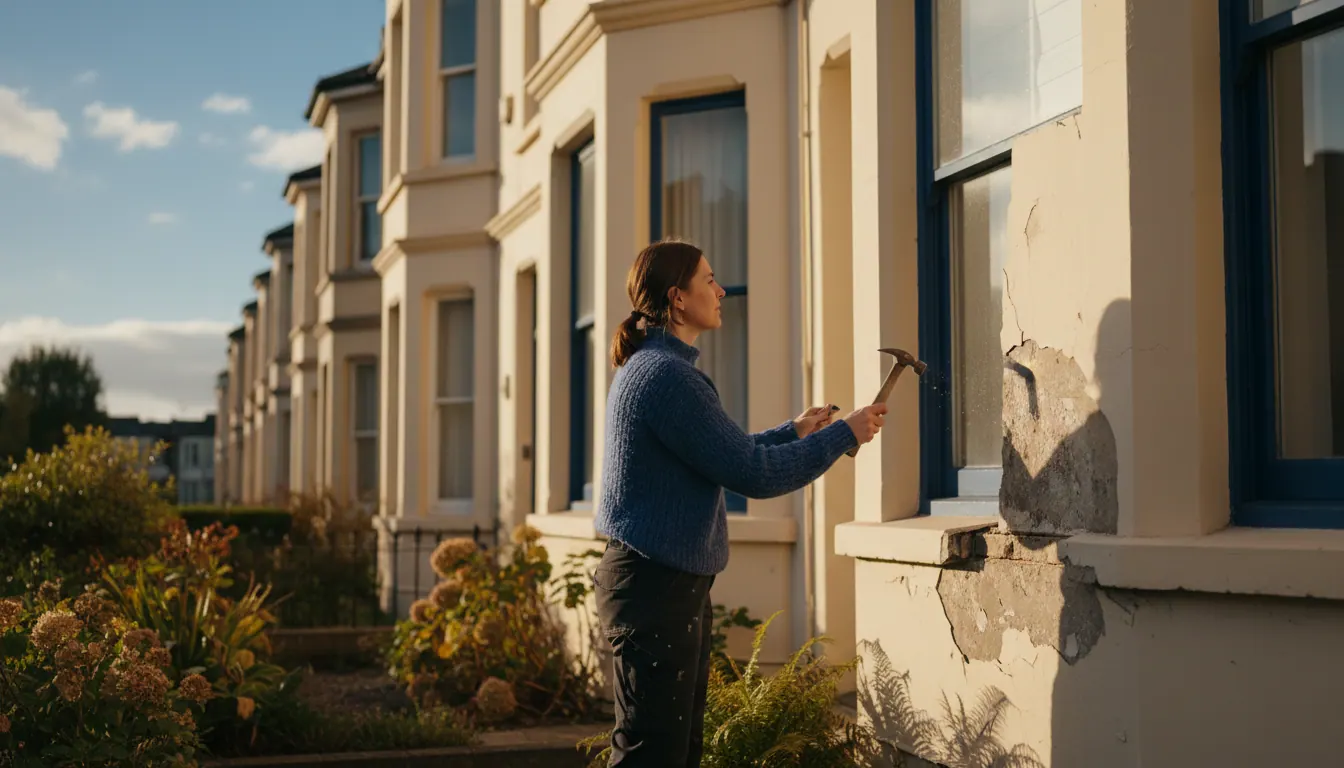
Rendering Newcastle upon Tyne homes is something we do regularly, and we see the same problems crop up again and again: blown render that sounds hollow when you tap it, hairline cracks that let moisture in, pebble dash that has lost its grip, and bare patches where render has simply dropped off. This guide explains what to look out for, what your options are, and what to expect when you get the work done.
The signs your render needs attention
Most homeowners notice a problem when a chunk of render falls away, but the warning signs usually appear well before that. Here is what to look for:
- Hollow or loose sections. Tap the surface with your knuckles. A dull, drum-like sound means the render has lost its bond with the wall behind it. This is called blown render, and it will not improve on its own.
- Cracking. Fine hairline cracks are common and often cosmetic, but wider cracks, or cracks that run around a bay window or above a lintel, can let water track behind the render. Once water gets in and freezes, the damage accelerates.
- Staining and damp patches. Dark tide marks or persistent damp patches on an outside wall often point to render that is no longer keeping moisture out.
- Pebble dash that is shedding stones. Old pebble dash is common on Newcastle semis and Tyneside flats. When the stones start to come loose or the base coat beneath is soft, re-rendering is the sensible answer.
- Bulging or bowing. Any section of render that visibly bulges away from the wall has failed. It needs to come off.
If you spot any of these, it is worth getting someone to take a proper look before a small repair job becomes a much bigger one.
Repair or re-render? Getting the decision right
Not every problem needs a full re-render. A localised area of blown or cracked render can often be cut out, the wall prepared and a new patch applied. We carry out plaster repairs on external walls all the time, and for many Newcastle homes, a targeted repair is the practical, sensible choice.
That said, there are situations where patching is a short-term answer at best. If the render across a whole elevation is in poor condition, or if the original application was thin and poorly bonded, you will likely be patching again within a few years. On older properties, especially those with solid brick walls common in Newcastle's Victorian streets, it is sometimes more straightforward to strip back to the masonry and start fresh.
We will always give you an honest assessment. If a repair will do the job properly, we will say so. If the render has had it and re-rendering is the better option, we will tell you that too, and explain why.
What types of render are used on Newcastle properties?
There is more than one way to render an outside wall, and the right choice depends on your property, its age and what you want from the finish.
Sand and cement render is the traditional approach and still widely used. It is hard-wearing and can be finished in different ways, including a smooth coat ready for exterior painting, a textured finish or pebble dash. It suits the solid brick walls found on many older Newcastle terraces.
Polymer and through-coloured renders (sometimes referred to by brand names such as K Rend) are pre-mixed products that include a colour pigment throughout the material. This means the finish does not need painting and tends to hold its colour well. They are popular on Newcastle properties where the owner wants a clean, low-maintenance exterior.
Lime render is the right choice for older properties built before cavity walls became standard, particularly solid-walled Victorian and Edwardian terraces. Solid brick walls need to breathe, and a hard cement render can trap moisture inside the wall rather than letting it escape. A lime-based render is softer and more flexible, which suits the way these older buildings move slightly over time. If you have a period property and are unsure which render is appropriate, it is worth getting advice before committing.
One thing we do not offer is external wall insulation systems. Our work is rendering and exterior painting, and we focus on doing those things properly.
What the process looks like
If you have not had external rendering done before, it helps to know what to expect.
1. Assessment and preparation. We look at the existing render, check for blown sections, identify any cracks and assess the condition of the masonry behind. Any loose or failed render is hacked off. The wall surface is cleaned and prepared so the new render has a sound base to bond to.
2. Application. Depending on the render system, this may be a two-coat or three-coat process. Each coat needs time to cure before the next is applied. Drying and curing times vary depending on the product used, the temperature and the weather, so we follow the manufacturer's guidance rather than rushing the job.
3. Finishing. The top coat can be left smooth, given a textured finish or have pebble dash applied. If the render is to be painted, we make sure the surface is fully cured before any exterior paint goes on.
4. Tidying up. We keep the work area as clean as we can throughout, and we leave the property tidy when we are done.
Weather plays a big part in external work. We do not render in freezing conditions or when heavy rain is forecast, because neither is good for the finished result. We will talk you through the timing when we quote.
Exterior rendering and exterior painting: a natural combination
One of the advantages of having us do the rendering is that we can also handle the exterior painting once the render has cured. There is no need to find a separate painter or coordinate two different trades. Our team covers both, which keeps things straightforward for you.
A freshly rendered wall that is properly painted also performs better over time. A good quality exterior masonry paint adds an extra layer of weather protection and keeps the render looking sharp for longer.
If your property already has sound render but the paint has faded, peeled or gone patchy, exterior painting on its own may be all you need. We are happy to take a look and advise.
Frequently asked questions
What is the difference between rendering and plastering? Plastering is the term for applying a smooth finish to internal walls and ceilings. Rendering is the same basic process but applied to exterior walls, using products that are designed to withstand weather. We do both, so if you need internal and external work done at the same time, one team covers it all.
Can you render over existing pebble dash? Sometimes, but it depends on the condition of what is already there. If the existing pebble dash is well bonded and sound, it can sometimes be used as a base. If it is blown or loose in places, those sections need to come off first. We assess each wall individually rather than making assumptions.
How long will new render last? That depends on the product used, how well it was applied, and how exposed the wall is to the elements. Properly applied render on a Newcastle property should give you many years of service. Keeping it painted (where applicable) and dealing with any small cracks early helps it last longer. We will give you practical advice when we quote.
Do you work on older Victorian and Edwardian properties? Yes, regularly. A lot of the properties across Newcastle upon Tyne and the surrounding areas are older solid-brick builds, and we are familiar with the considerations that come with them, including the importance of choosing a render that is compatible with the original materials. If you are unsure what is right for your property, just ask.
Get a free quote for rendering in Newcastle upon Tyne
If your render is looking tired, cracking or coming away from the wall, the sooner you get it looked at, the better. Left too long, water ingress can cause problems that go well beyond the render itself.
We work across Newcastle upon Tyne and the surrounding areas, seven days a week, from 7am to 7pm. We are fully insured and we quote each job individually once we have had a proper look at what is needed.
Call us on 07467 216111 for a free, no-obligation quote. We are straightforward to deal with and we will give you an honest answer about what your property actually needs.